In prediabetes, blood sugar is high without any sign of diabetes and it is not taken as a disease entity. However, there is an increased risk for diabetes and cardiovascular disease. Prediabetes is usually associated with central obesity, dyslipidemia and hypertension and like metabolic syndrome; intervention is needed to mitigate the risk of progressing into clinical diseases. In essence, impaired glucose tolerance, impaired fasting blood sugar, insulin resistance (metabolic syndrome, syndrome X) and prediabetes are closely related. Although prediabetes is asymptomatic, symptoms to recognize besides high blood sugar are increased urination, thirst, and tiredness.
Risk factors
Since it is subclinical, risk factors for prediabetes include:
- Being overweight (it is not obesity; it is being above the BMI for that height and weight of the individual).
- Being 45 years and older
- Having family history of type 2 diabetes mellitus
- Being physically active less than 3 times a week
- Having history of gestational diabetes/ having giving birth to a big baby
- Having polycystic ovary syndrome
Cause
Prediabetes can occur when the body becomes resistant to insulin or unable to use insulin and is considered by some as an early stage of diabetes. Health complications occur in these individuals before medical diagnosis of diabetes is made. Genetics may play a small role but lifestyle changes and diet are the main causative parameters.
Diagnosis for prediabetes
- Fasting blood sugar level of 110 to 125 mg/dL (6.1 to 6.9 mM/L) (WHO, ADA)
- Two hour glucose tolerance test (after ingesting standardized 75G glucose) > blood sugar level of 140-199 mg/dL (7.8 to 11.0 mM)
- Glycated Hb between 5.7 and 6.4 percent
Management
Life style modification include: diet, exercise, weight reduction (aggressive undertaking) and drugs if these regimes do not work
Life style intervention to prevent development of type 2 diabetes
The following include interventions:
- Healthy diet
Limited saturated fat, no trans fat, refined sugars and refined grains, limited intake of sodium and total calories. - Physical fitness
30-40 minutes of physical exercise per day, 3-5 days per week - Weight loss
5-10% of body weight - Cessation of smoking
Those diet regimes claiming benefits await scientific proof.
Drug therapy
For those who were unable to do above, drug therapy is beneficial.
Metformin and acarbose may help prevent the development of frank diabetes and have a good safety profile. Other drugs, newer agents await more data and analysis.
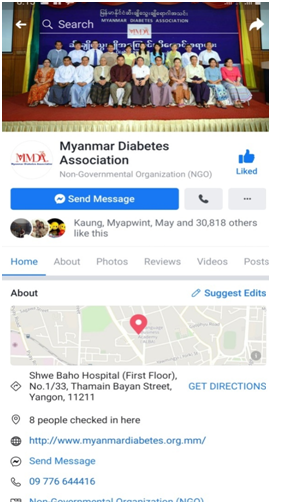
Myanmar Diabetes Association (MMDA)
This is Face Book page of MMDA. It is making headlong progress now with videos of physical activity together with EIM (Exercise is Medicine) group.