

Introduction
Geriatricians have embraced the term “geriatric syndrome”, using it extensively to highlight the unique features of common health conditions in the elderly that do not fit into a single disease category and typically have multiple causes.1 Geriatric syndromes such as delirium, falls, incontinence, polypharmacy and frailty are highly prevalent, multifactorial and associated with substantial morbidity and poor outcomes.2
Case Presentation
An 86-year-old woman from Dala township was admitted to MU-4 on December 17, 2025, with the chief complaint of respiratory symptoms for four days’ duration. The patient developed increased cough with yellow sputum and progressive dyspnoea over four days. Symptoms were worse at night. There was no history of orthopnoea and paroxysmal nocturnal dyspnoea, chest pain, palpitations, syncope or peripheral oedema. She denied fever, night sweats and neck swelling.
She was admitted with a similar episode in 2018 but not started on long term inhaler therapy. She was chronic smoker with estimated 20 pack-years.
Functional Status, she had a fall 3 years prior, resulting in back injury and subsequent inability to walk. She didn’t seek hospital care or imaging at that time. Since then, she has remained bed-bound due to fear of fall. She required assistance with toileting and hygiene.
Socio-economic history, she is a widow with 10 children. Her husband passed away 40 years ago and two children died from heart disease. She currently lives with her fourth daughter, who is primary caregiver and breadwinner. The family is extended type with nine members in total.
Memory and mood history, she has had progressive memory decline over 10 years. In the past 2 years, she developed mood disturbances including frequent crying, irritability and depressive symptoms
On Examination
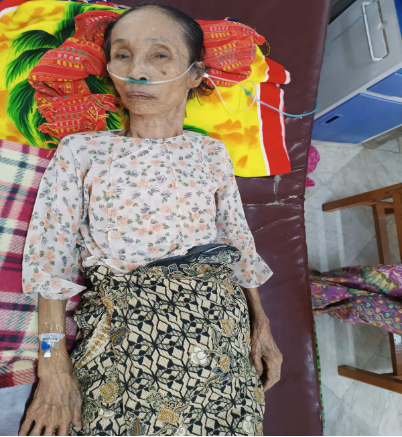
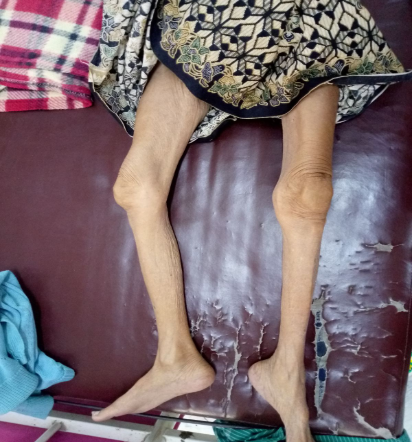
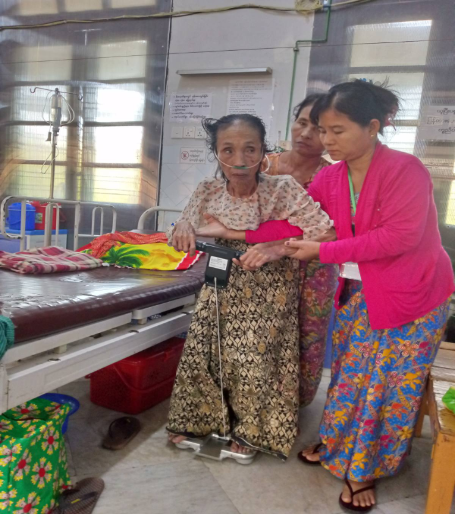
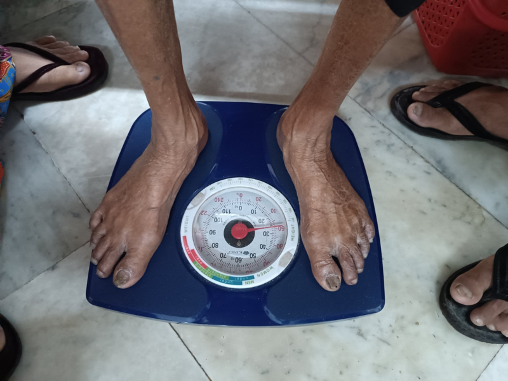
The patient is cachetic and emaciated with BMI is 11*. She could not stand straight due to generalized muscle wasting and frailty. Mild pallor, palmar erythema is noticed. No clubbing and lymph node enlargement. Respiratory system examination revealed widespread rhonchi in all zones of both lung fields. No loud P2 (Pulmonary element of second sound). On abdominal examination, scaphoid abdomen with no palpable mass. CVS and CNS examination were unremarkable.
How many “Geriatric Syndromes” are seen in this patient?
1. Malnutrition
Nutritional Assessment in elderly done by MNA mini-nutritional assessment short form – Score zero patient has severe malnutrition.
Risks of malnutrition in this patient
- Dementia
- COPD
- Falls and physical restraint due to fear of further attack of falls
- Poor nutritional knowledge of caregiver
- Financial problem
2. Cognitive impairment
Abbreviated Mental Score (AMTS score) = 6 (moderately impaired)
Mini Mental State examination (MMSE) total scoring – 3 (severe cognitive impairment)
Advanced stage of dementia due to basic activities of daily living was dependent on family members ( She needs help with any of the following personal care such as Using the toilet, Getting dressed, Bathing/Showering, and eating)
3. Delirium
Delirium present at the day of admission according to Confusion Assessment Method (CAM).
Predisposing factors of delirium in this patient
- Advanced age, severe cognitive impairment, functional impairment in ADLs and multiple medical comorbidity precipitated by acute pulmonary events, acute infective exacerbation of COPD, hospitalized and urinary retention
4.Frailty
Fried Frailty phenotype
Five Criteria (1 point each if met)
• Unintentional Weight Loss: Losing ≥ 10 lbs (4.5 kg) or ≥ 5% of body weight in the past year, or a BMI under 18.5 kg/m². [Present] • Exhaustion: Self-reported via two questions from the CES-D depression scale where the patient feels that everything is an effort or they cannot get going most or all of the time. [Present] • Weakness: Low handgrip strength measured using a dynamometer, adjusted for sex and body mass index (BMI). [Present] • Slowness: Slow walking speed (gait speed) over a distance of 15 feet (4.57 meters), adjusted for sex and height. [Present] • Low Physical Activity: Low weekly energy expenditure calculated via standardized physical activity questionnaires [Present]
5 scores – Frailty (+)
5. Sarcopenia (Low muscle mass plus reduce muscle strength and/or reduce muscle function)
- Muscle mass could not be assessed
- muscle strength-very weak handgrip
- Muscle function- gait speed- cannot walk at all
6. Immobility or fall risk in elderly
Berg Balance Scale
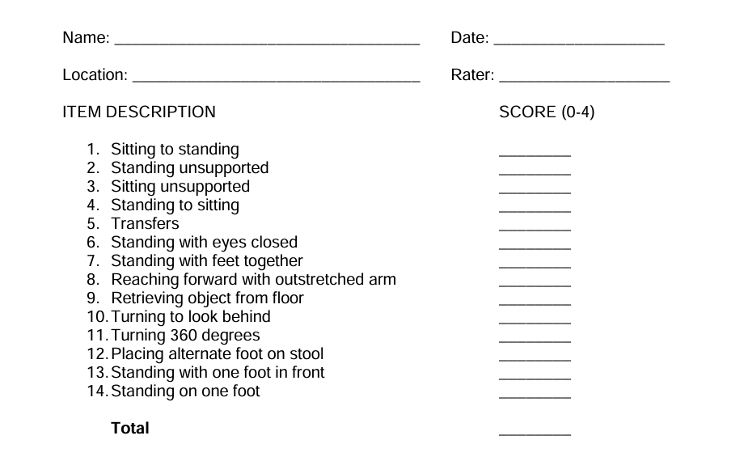
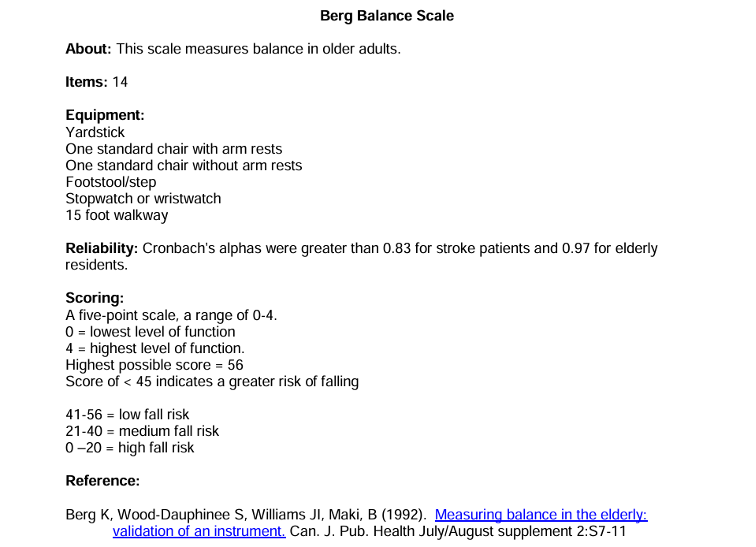
Patient has 0-20 Berg Balance Scale and has significant immobility and high fall risk.
7. Depression
According to PHQ2 (Patient Health Questionaire-2)
Little interest or pleasure in doing things more than half the day over the last 2 weeks and feeling down, depressed or hopeless more than half the day over the last 2 weeks are noticed and diagnosed as depression.
8. Urinary incontinence – present
9. Pressure sores – not present
10. Polypharmacy – not present
Discussion
Geriatric syndromes are multifactorial health conditions that commonly affect older adults as a result of age-related physiological changes, chronic diseases, and environmental factors. Unlike single organ diseases, geriatric syndromes are characterized by complex atiologies and often involve multiple physiological systems simultaneously. These conditions frequently result in functional decline, increased dependency, reduced quality of life, and increased healthcare utilization. Consequently, geriatric syndromes represent a major focus of geriatric medicine and comprehensive elderly care.2
Common geriatric syndromes present with falls, frailty, cognitive impairment, delirium, urinary incontinence, orthostatic hypotension, and polypharmacy. Falls are among the leading causes of injury, disability, and loss of independence in older adults. Frailty is characterized by reduced physiological reserve and increased vulnerability to stressors, predisposing elderly individuals to adverse health outcomes. Cognitive impairment and delirium may affect memory, attention, and decision-making abilities, while urinary incontinence often contributes to social isolation, psychological distress, and diminished self-esteem. Orthostatic hypotension may lead to dizziness, syncope, and falls, whereas polypharmacy increases the risk of adverse drug reactions and medication-related complications (Liv Hospital, 2026).
The clinical significance of geriatric syndromes extends beyond individual symptoms because these conditions contribute substantially to disability, hospitalization, institutionalization, and mortality among older adults. In addition, geriatric syndromes impose considerable emotional, social, and economic burdens on patients, families, and healthcare systems. Early recognition and comprehensive management are therefore essential to preserve functional independence, improve quality of life, and optimize health outcomes in the ageing population.
References
1. Eda, A. and Aysel, K. (2019) ‘Classification and characteristics of older adults’, Journal of Gerontology and Geriatric Research, 8(2), pp. 1–6.
2. Inouye, S.K., Studenski, S., Tinetti, M.E. and Kuchel, G.A. (2021) ‘Geriatric syndromes: clinical, research and policy implications of a core geriatric concept’, Journal of the American Geriatrics Society, 69(1), pp. 1–8.
Author Information
May Bo Bo Thet, Sandar Pyone, Min Zaw Oo
- Consultant Physician, Department of Geriatric Medicine, Yangon General Hospital
- Associate Professor, Department of Geriatric Medicine, Yangon General Hospital
- Clinical Director, Professor, Department of Geriatric Medicine, Yangon General Hospital


